RWB
2013, object, overglaze-painted porcelain, 60 x 30 x 30 cm
Kaolin. Art and Design in Contemporary Ceramics – Jingdezhen (China)
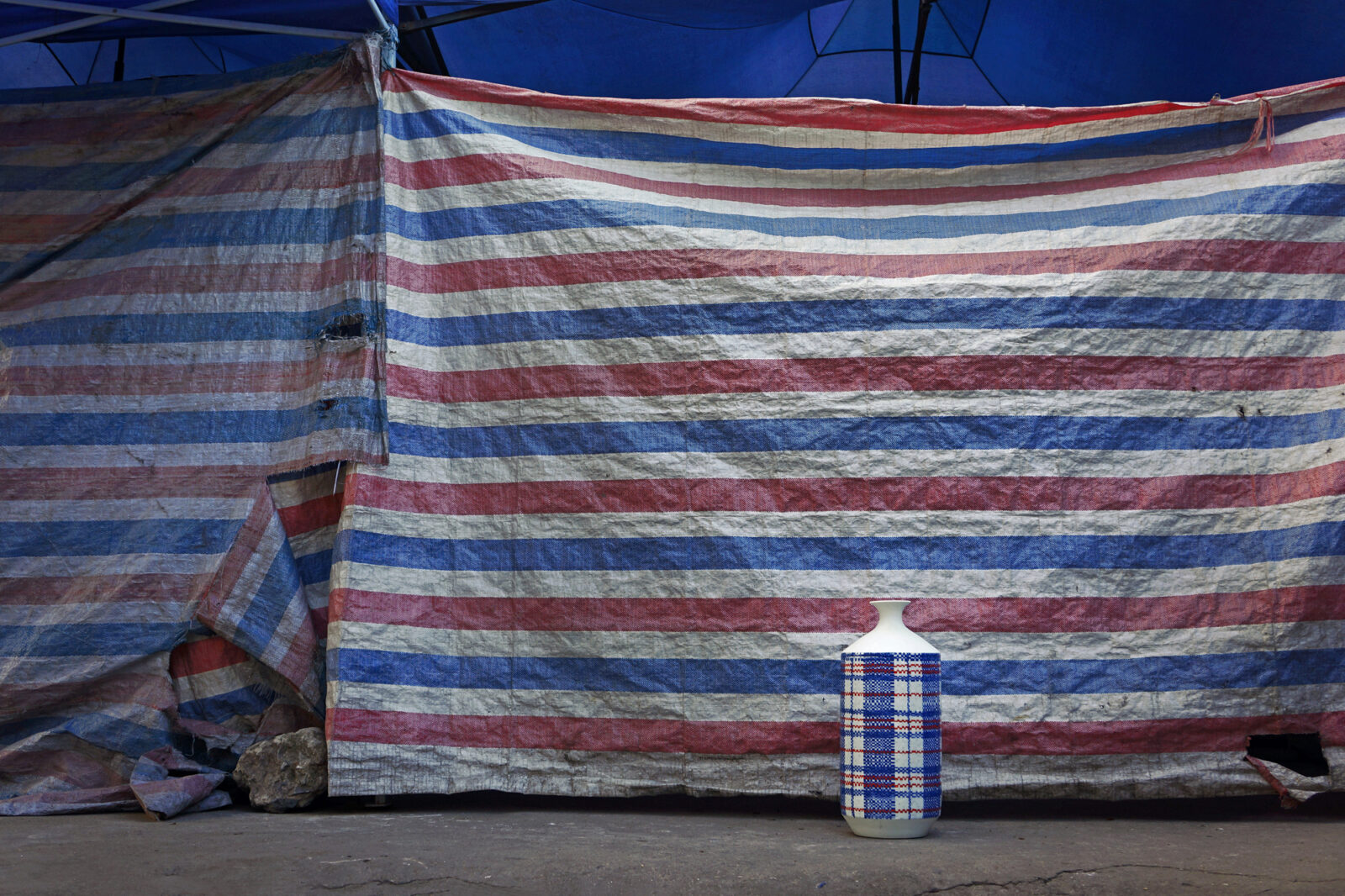
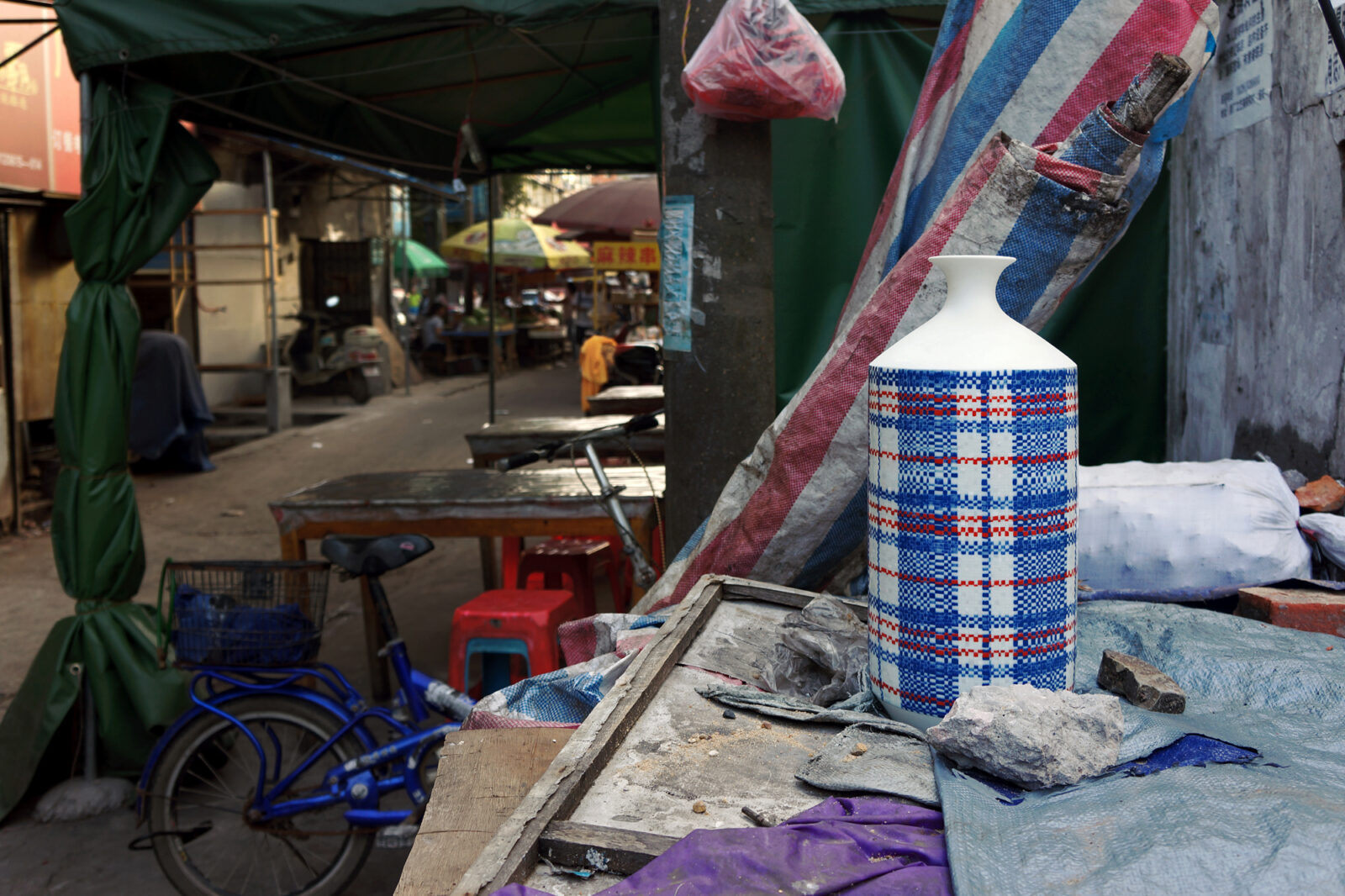
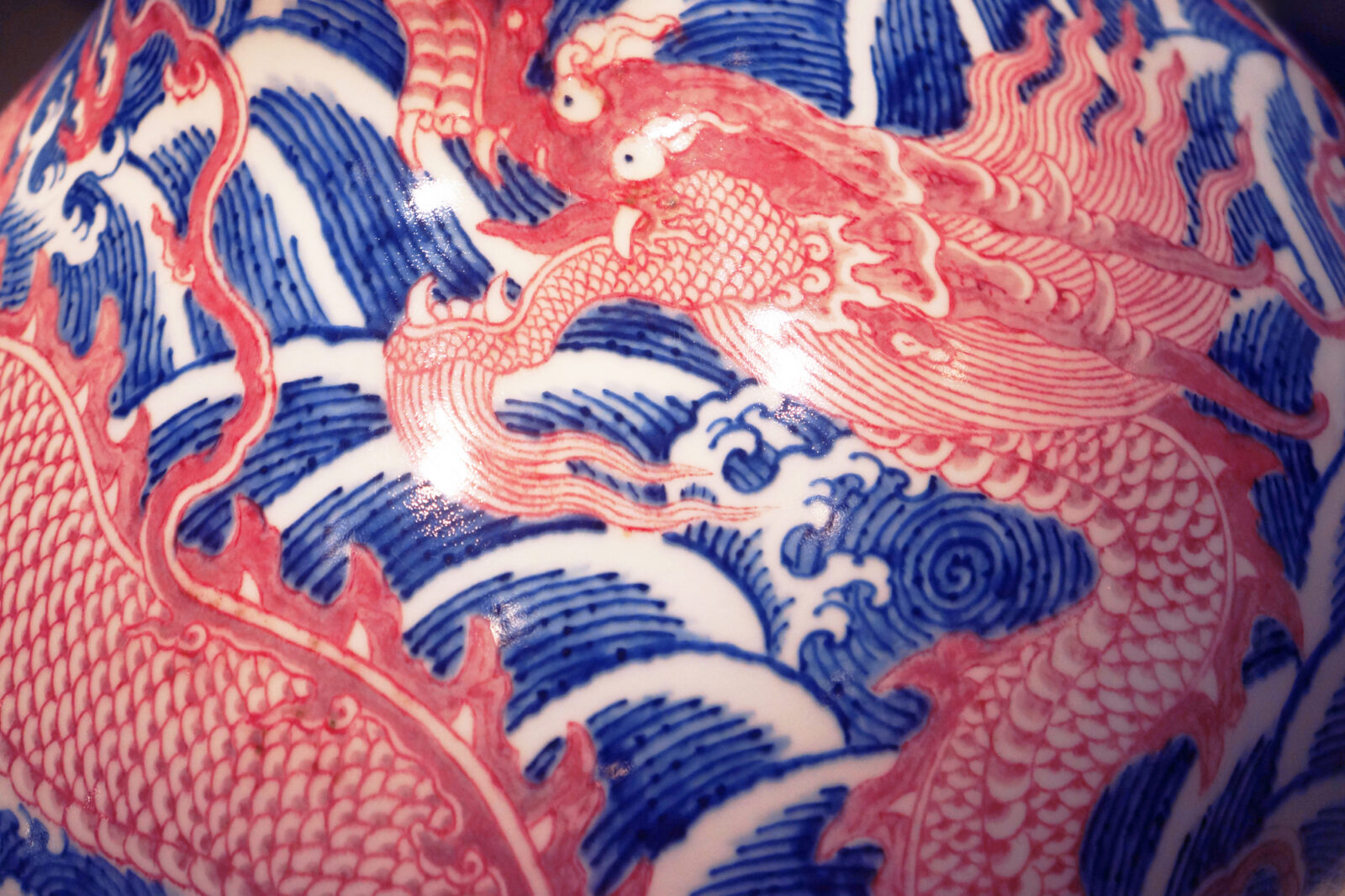
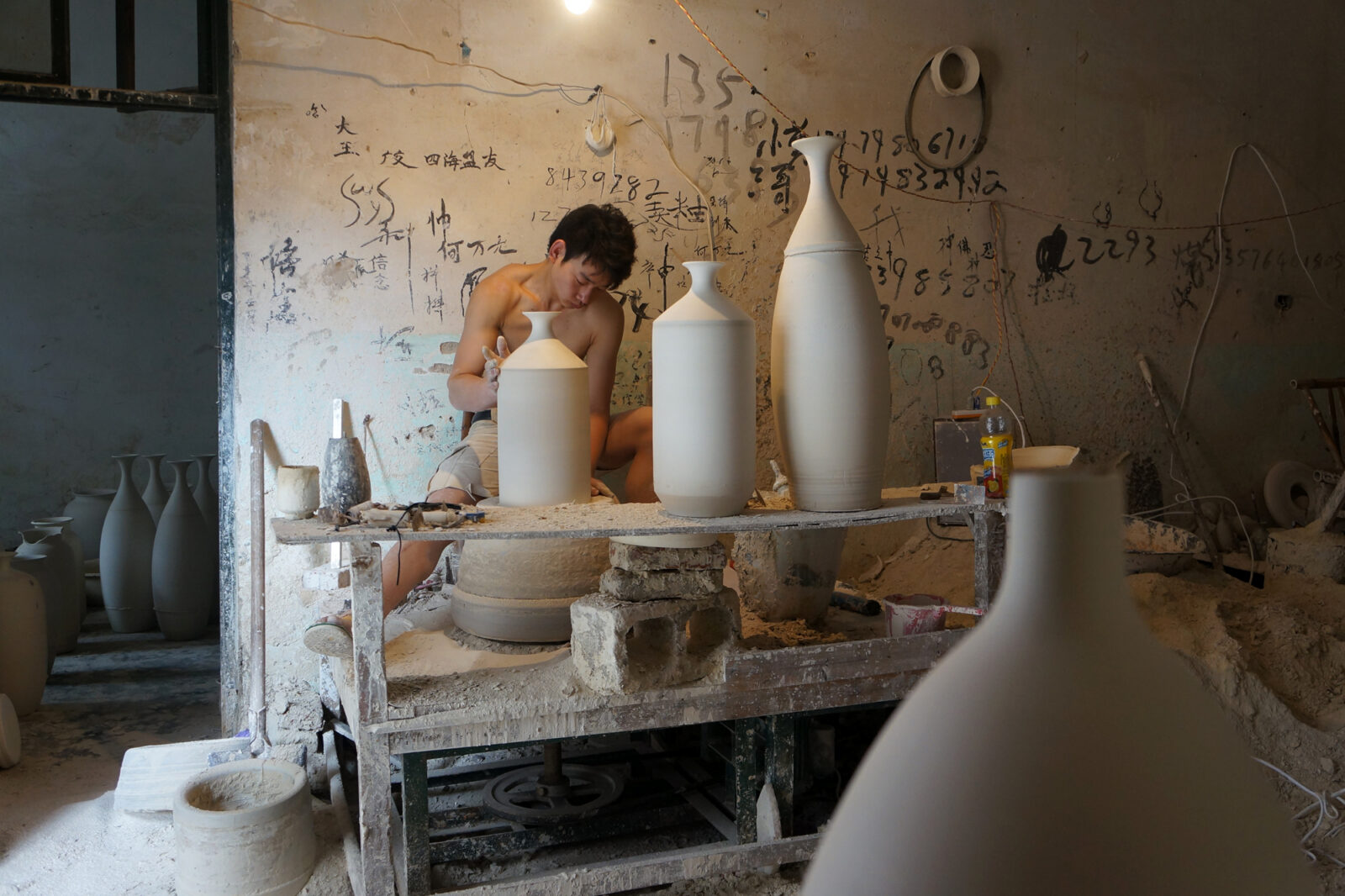
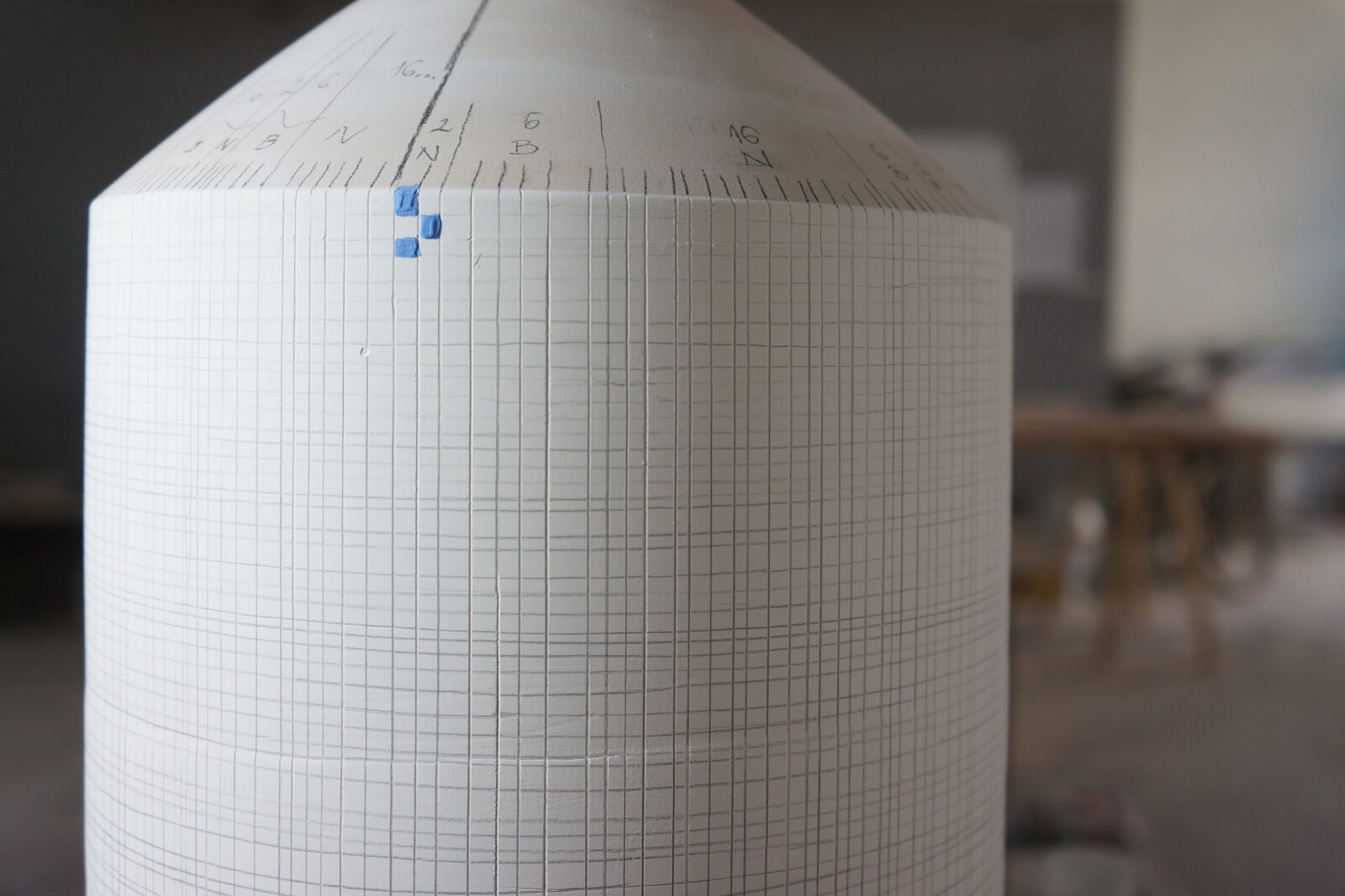
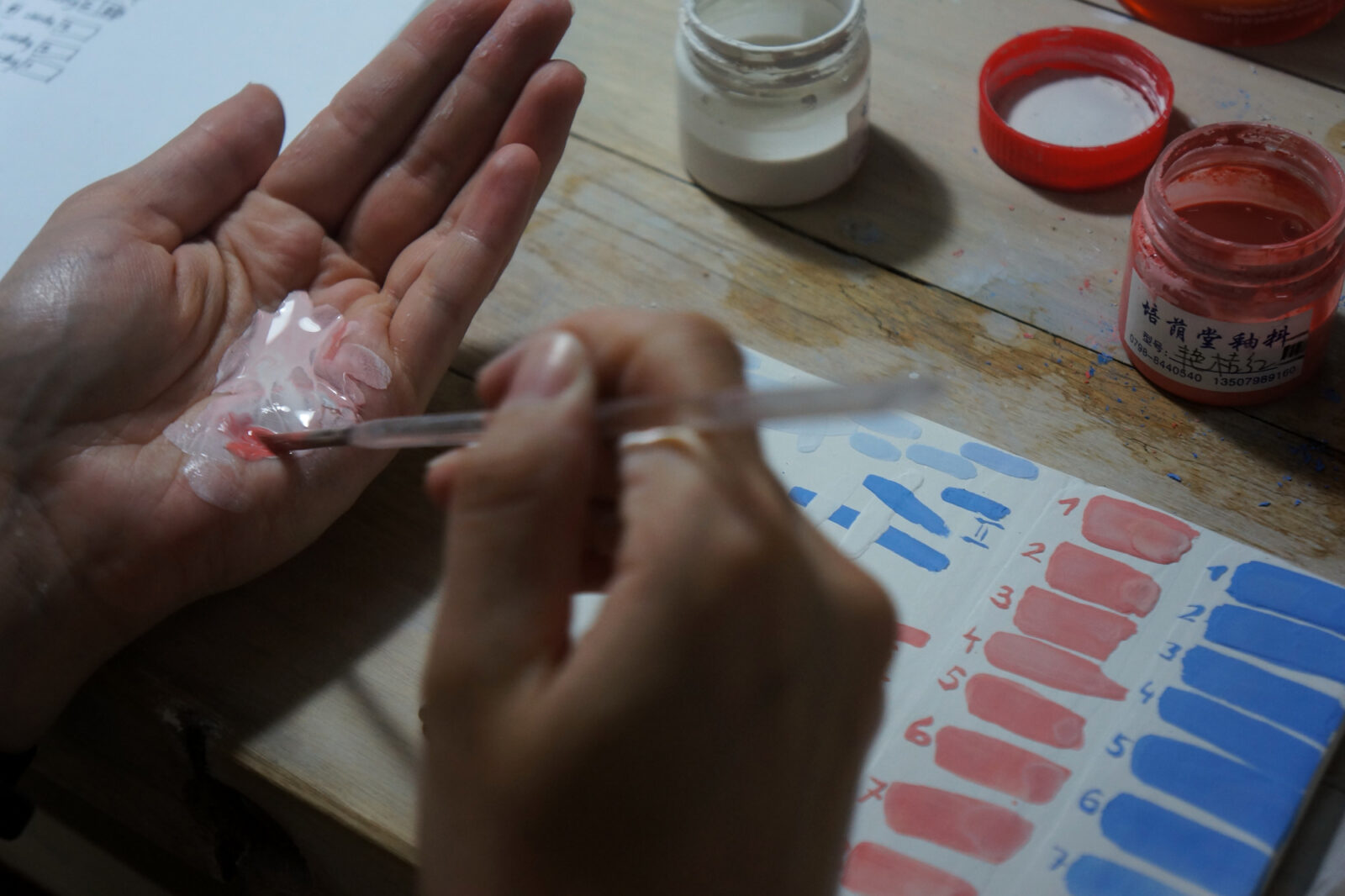
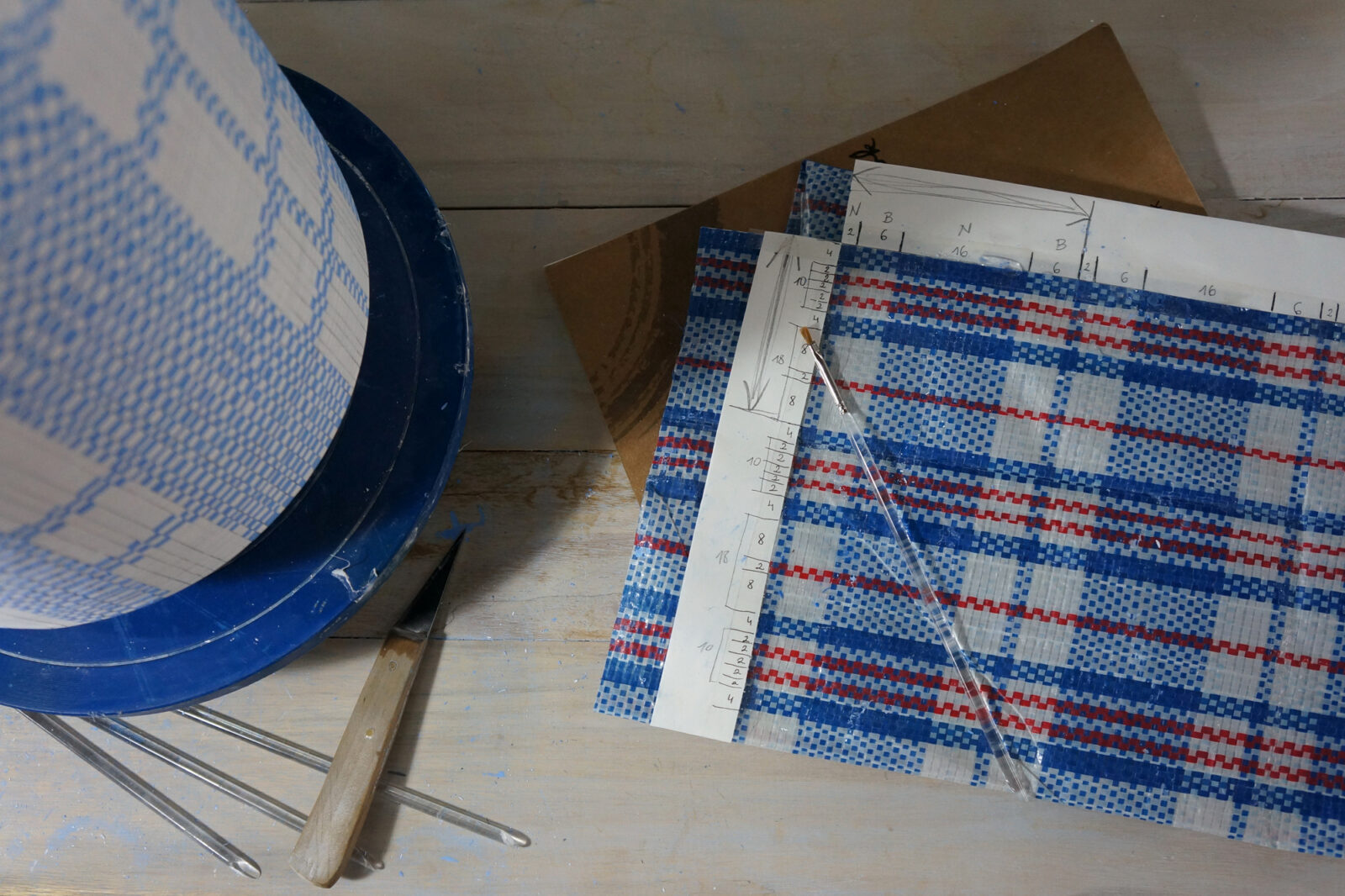
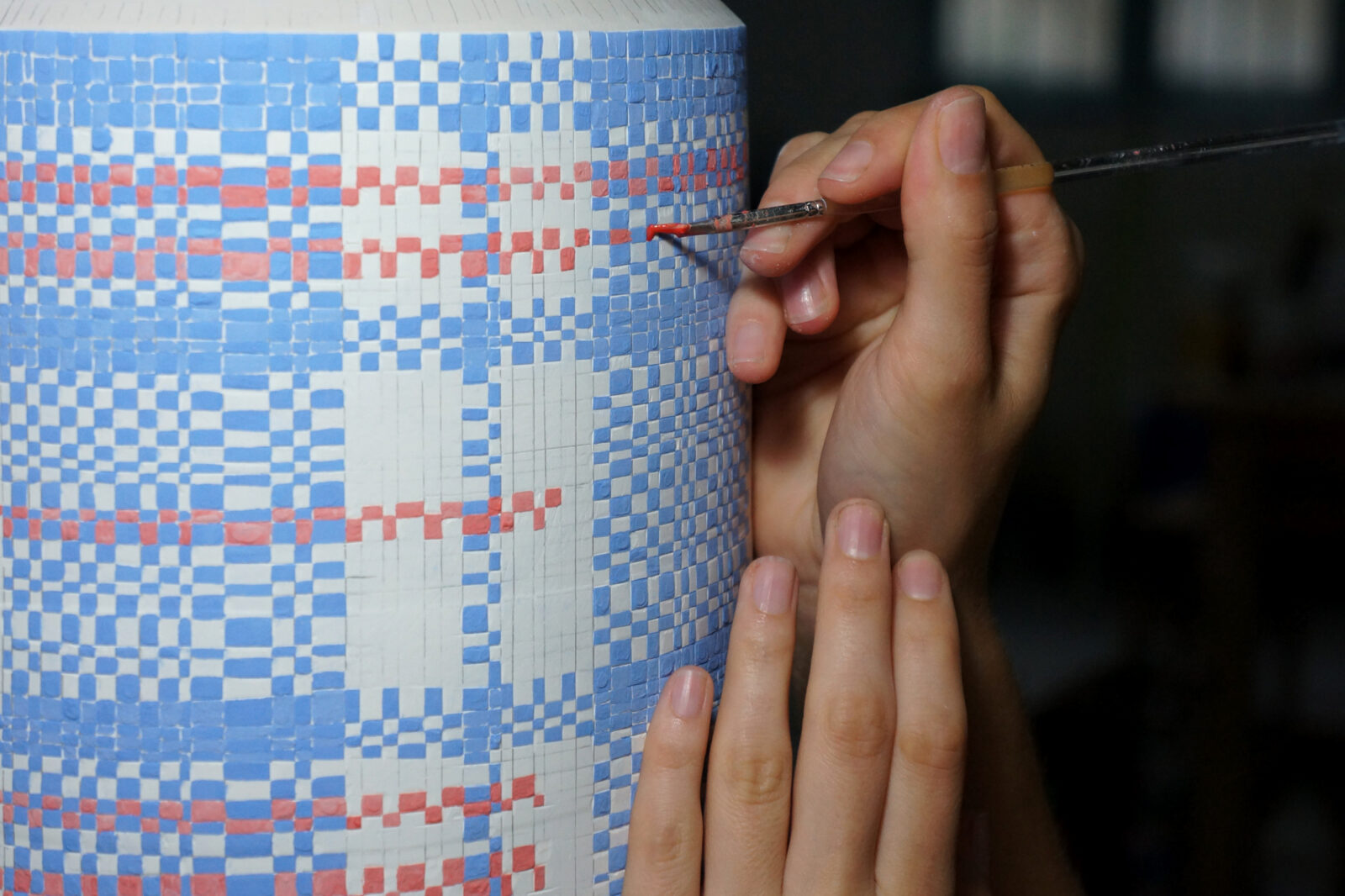
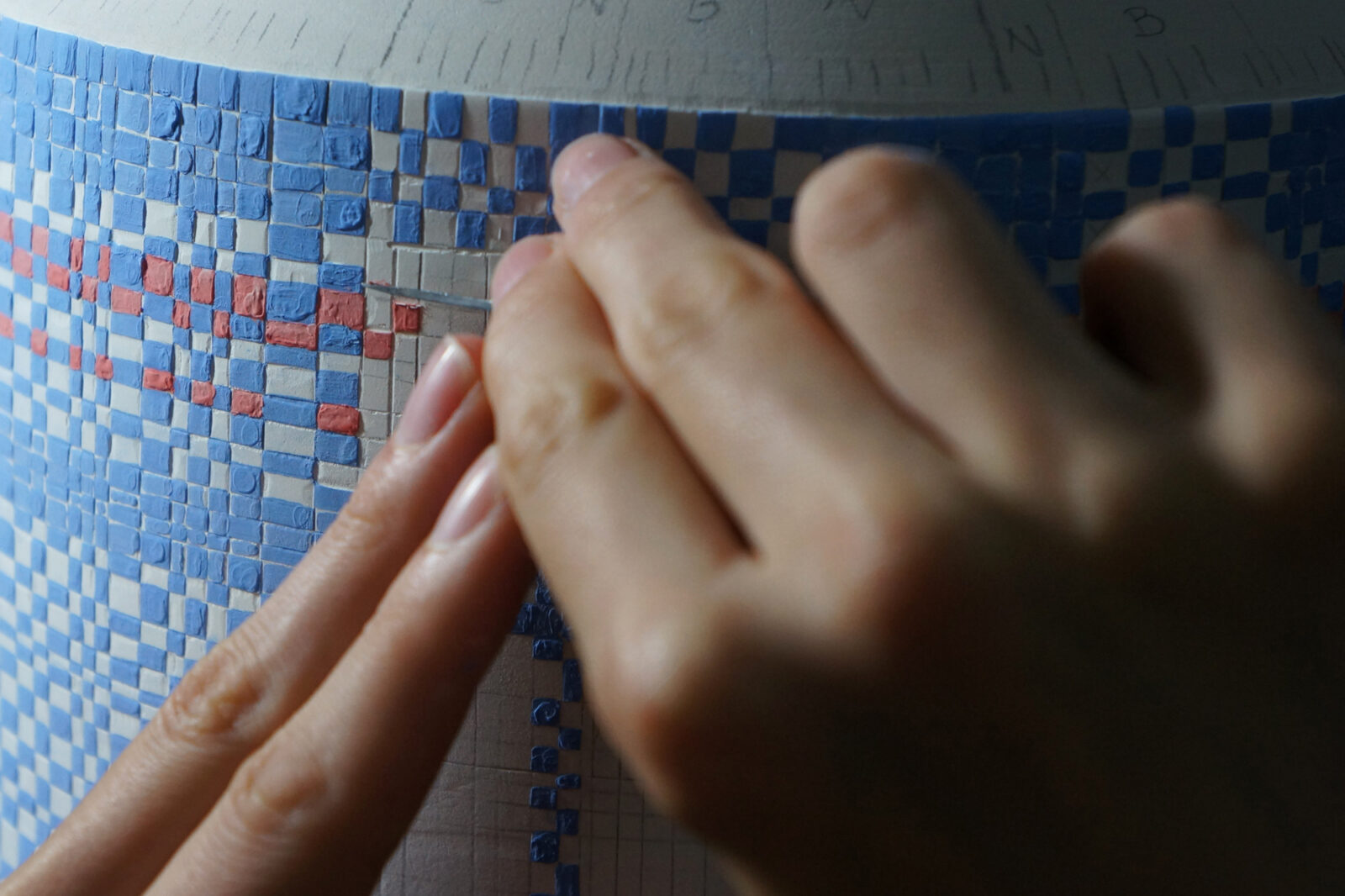
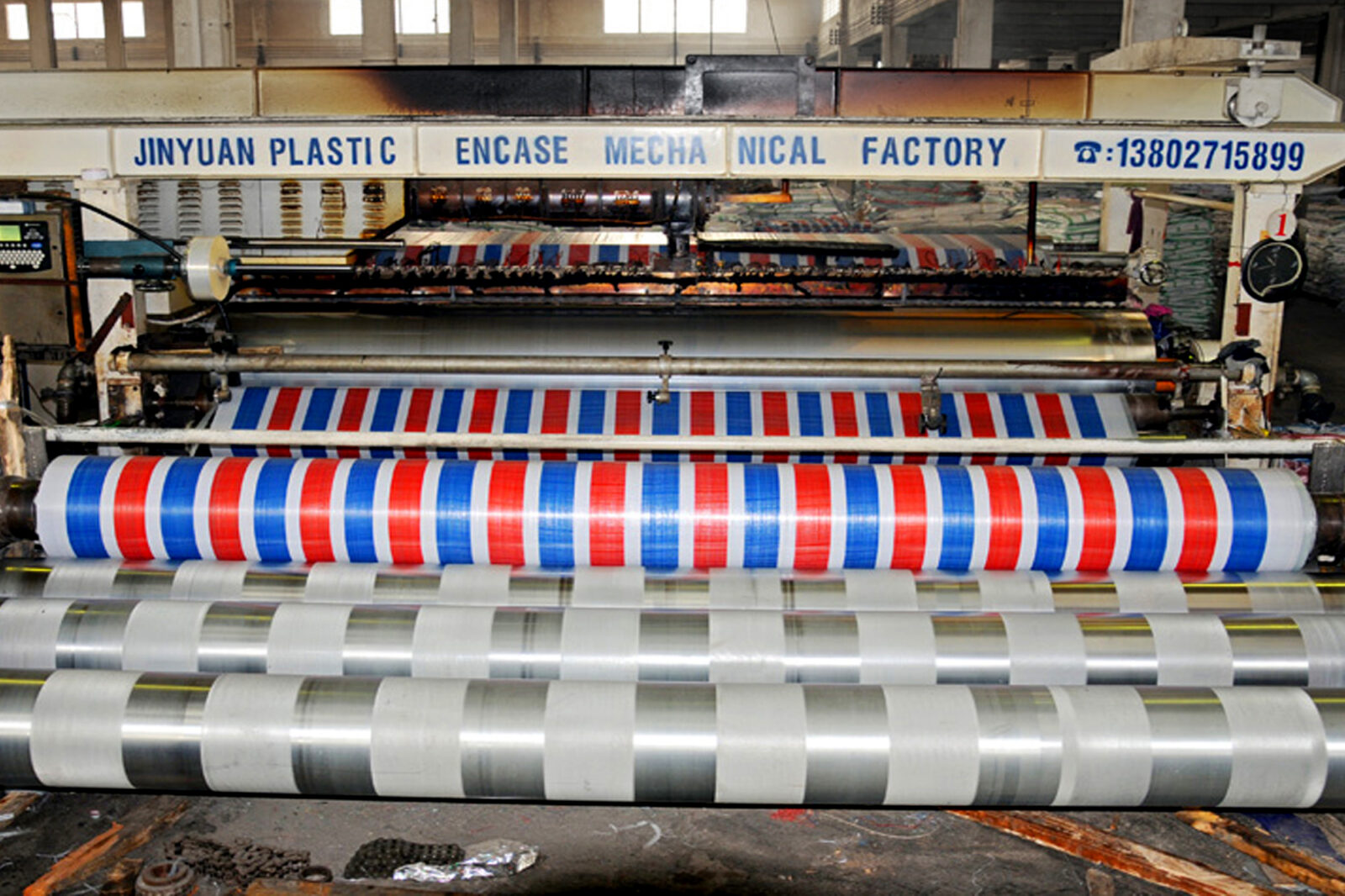
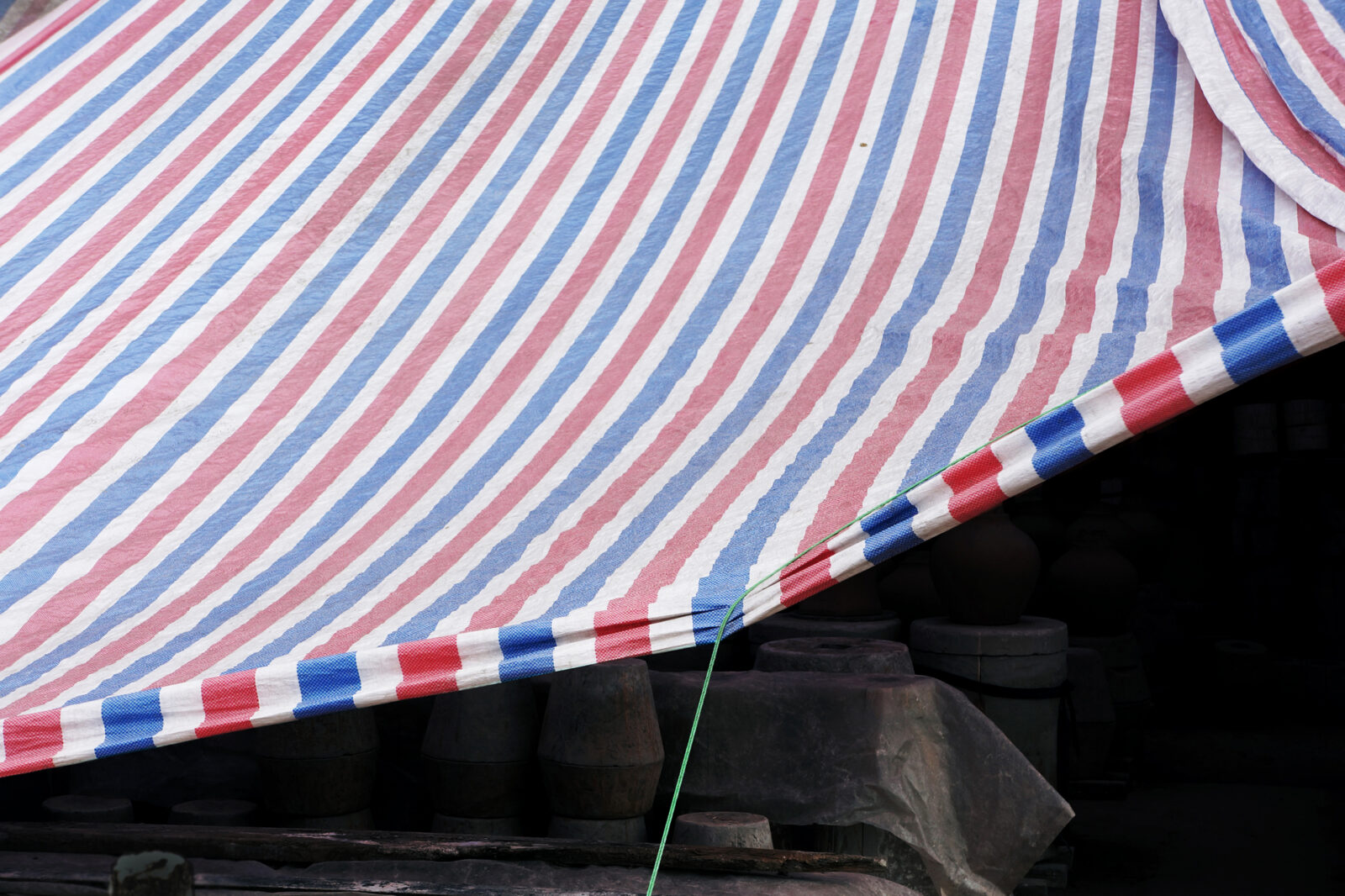
In the landscape of the Chinese city of Jingdezhen (known for its porcelain-making tradition), ceramics and plastic coexist and blend together, giving the public space a grotesque character.
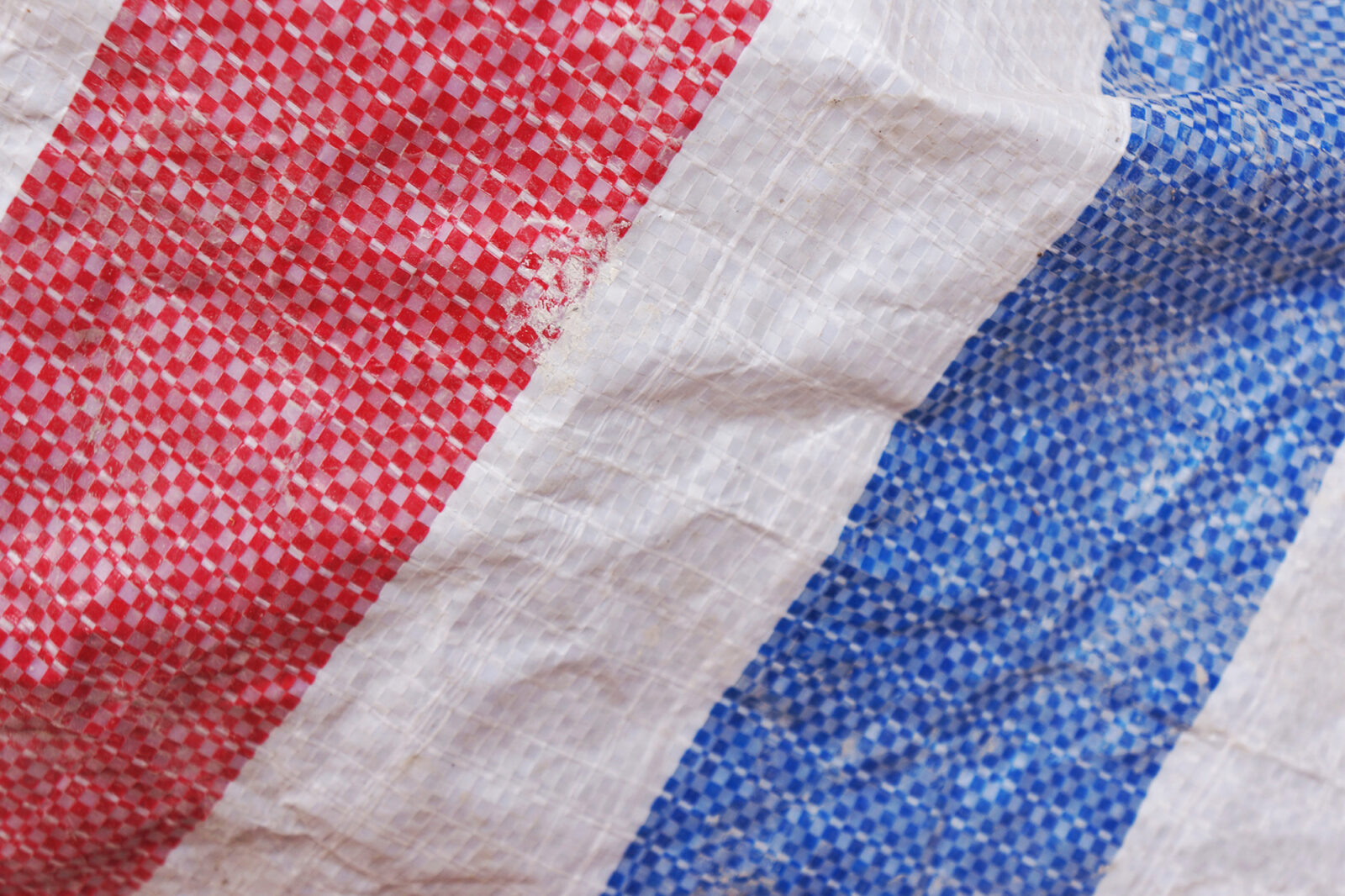
The starting point was a Qing Dynasty porcelain vase depicting a mythological dragon surrounded by ocean waves. I saw in it an analogy to a technical fabric called RWB330 (‘RWB’ stands for: Red, White, Blue), which can be found almost everywhere in the world. For me, it is a symbol of globalization, the global exchange of goods, and a metaphor for mass culture. Mass production is one of the defining characteristics of Chinese civilization. Manual labor in China is increasingly associated with cost-cutting and the exploitation of workers, and the “Made in China” label evokes negative associations in the West.
I have contrasted the cheap, machine-driven, mass production of synthetic fabric with the artisanal process of shaping porcelain on a potter’s wheel and the painstaking application of decorations. A contrast also emerges between the noble porcelain and the common plastic.