Stones That Cry
2020, installation, ceramics, string
Archaeological Museum in the City Arsenal, Wrocław City Museum
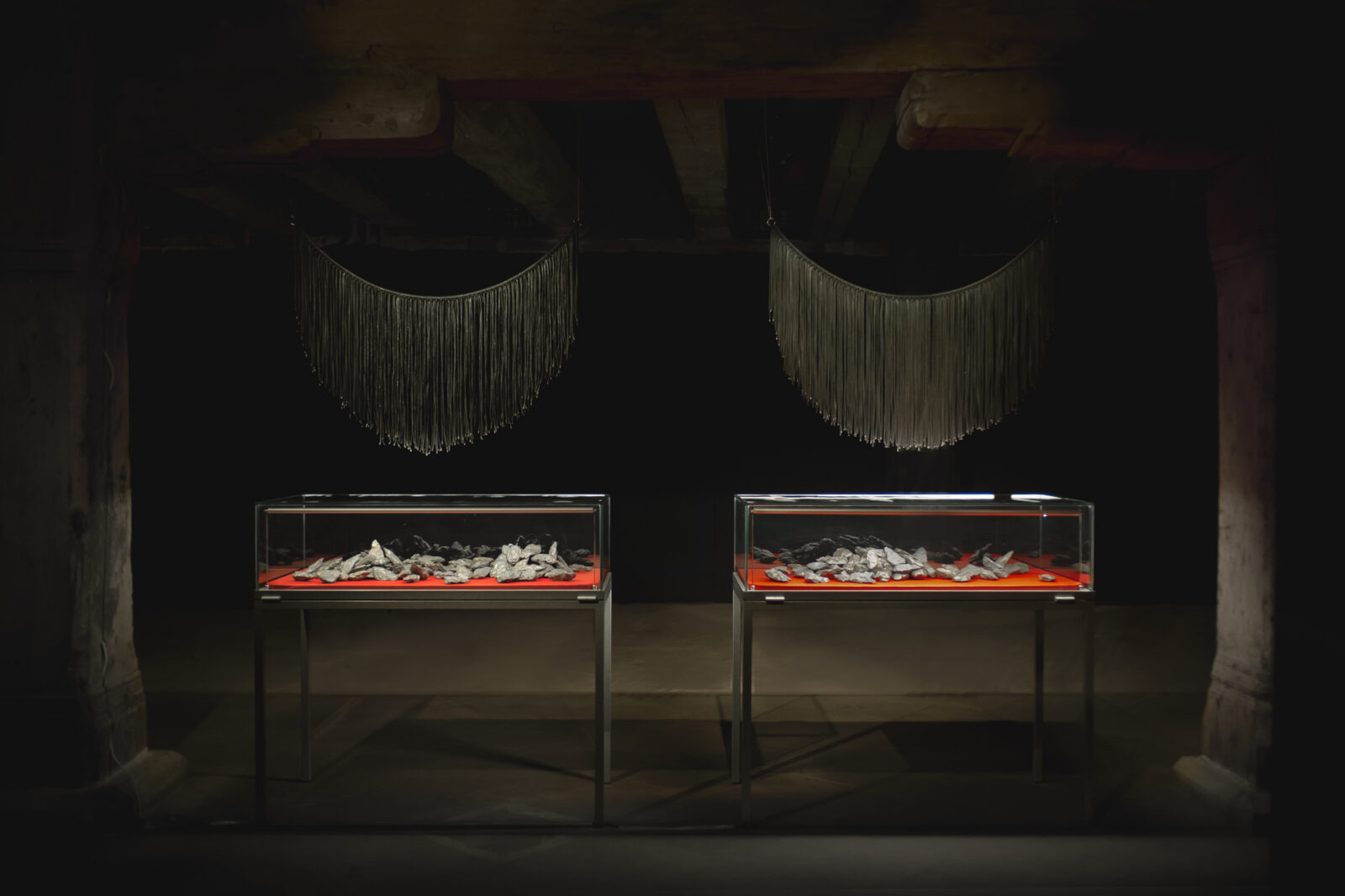

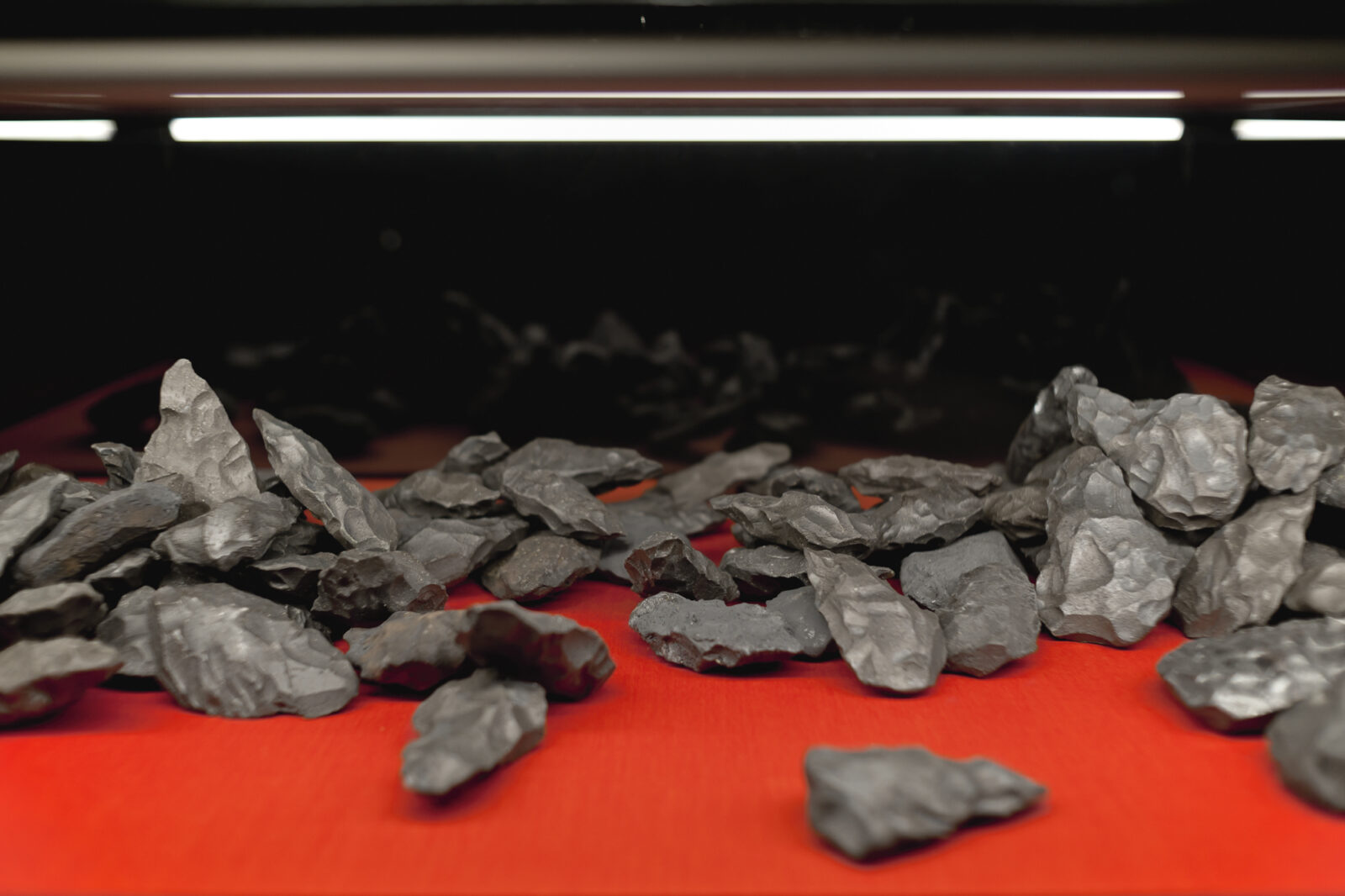
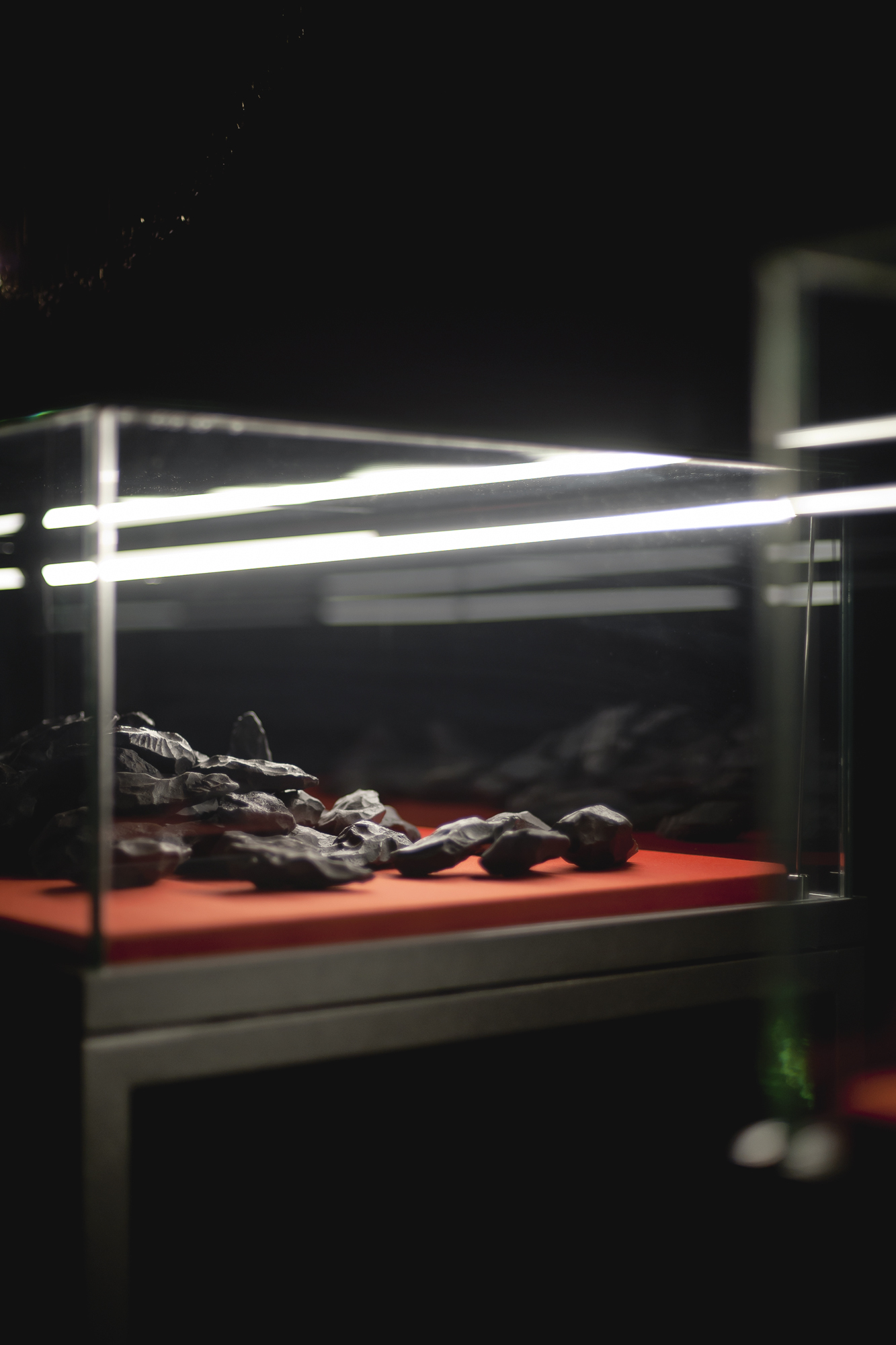
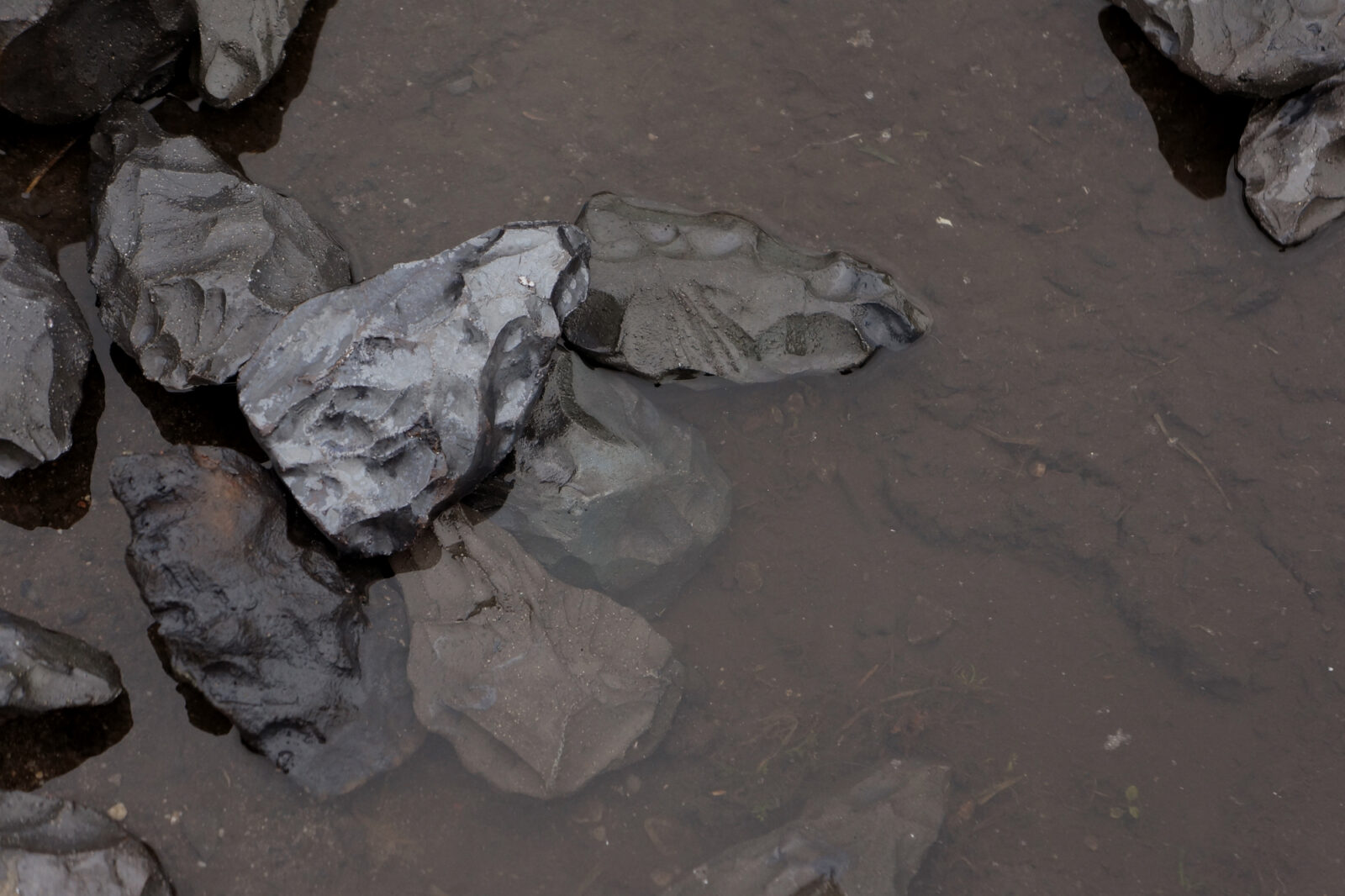
The installation consists of two repeated elements – a primitive cutting tool and a piece of string. According to scientists, these are the only objects necessary for human survival in extreme conditions. The project was exhibited in the traditional exhibition space of the Archaeological Museum. The choice of this venue is not only an obvious reference to the installation’s key element – the hand axe – but also a reminder that the violation of human dignity has a long history.
„Hand axes are among the oldest stone tools made by humans. Their emergence represented a true technological breakthrough in the Lower Palaeolithic. Hand axes continued to be used in the Middle Palaeolithic, making them the longest-used type of tool in human history. They are characterised by a lenticular cross-section and a symmetrical shape resembling an almond, a heart or an oval, with sharp lateral edges and a rounded base. They were produced by the gradual reduction of a stone block using bilateral flaking. Hand axes were multi-purpose tools, sometimes referred to as the ‘Swiss Army knives of the Stone Age’. They were used primarily for quartering carcasses, filleting meat, extracting marrow from bones, but also possibly for woodworking and digging in the ground. The symmetry of the hand axes and the perfection of their craftsmanship, which was not essential for their functionality, suggests that their purpose was not limited solely to the role of knives or cleavers. It has been hypothesised that they may have fulfilled important social functions, serving as indicators of a potential partner’s quality in mate selection.”
Agata Witkowska, text from the exhibition leaflet
Stones reveal distant histories – the process of life forming on Earth, and humanity’s adaptation to prevailing conditions. Stones can be silent witnesses to historical events or tools in the hands of those who shape them. They are works of nature. Through human intervention, they sometimes become works of art.
This work is a symbolic act of joining the social campaign ‘Black Tears’, launched in 2016 by Women’s Protest. The campaign supports protests and demonstrations concerning human rights. Its emblem – the black tear – refers to the symbolism of prison tattoos, in which a tear on the cheek signifies a longing for freedom.