Corona muralis
2021, installation, concrete, glass, cordura, haberdashery elements, steel rods, 130 x 40 x 40 cm
Technical collaboration: Jarosław Słomski
Museum of Architecture in Wrocław
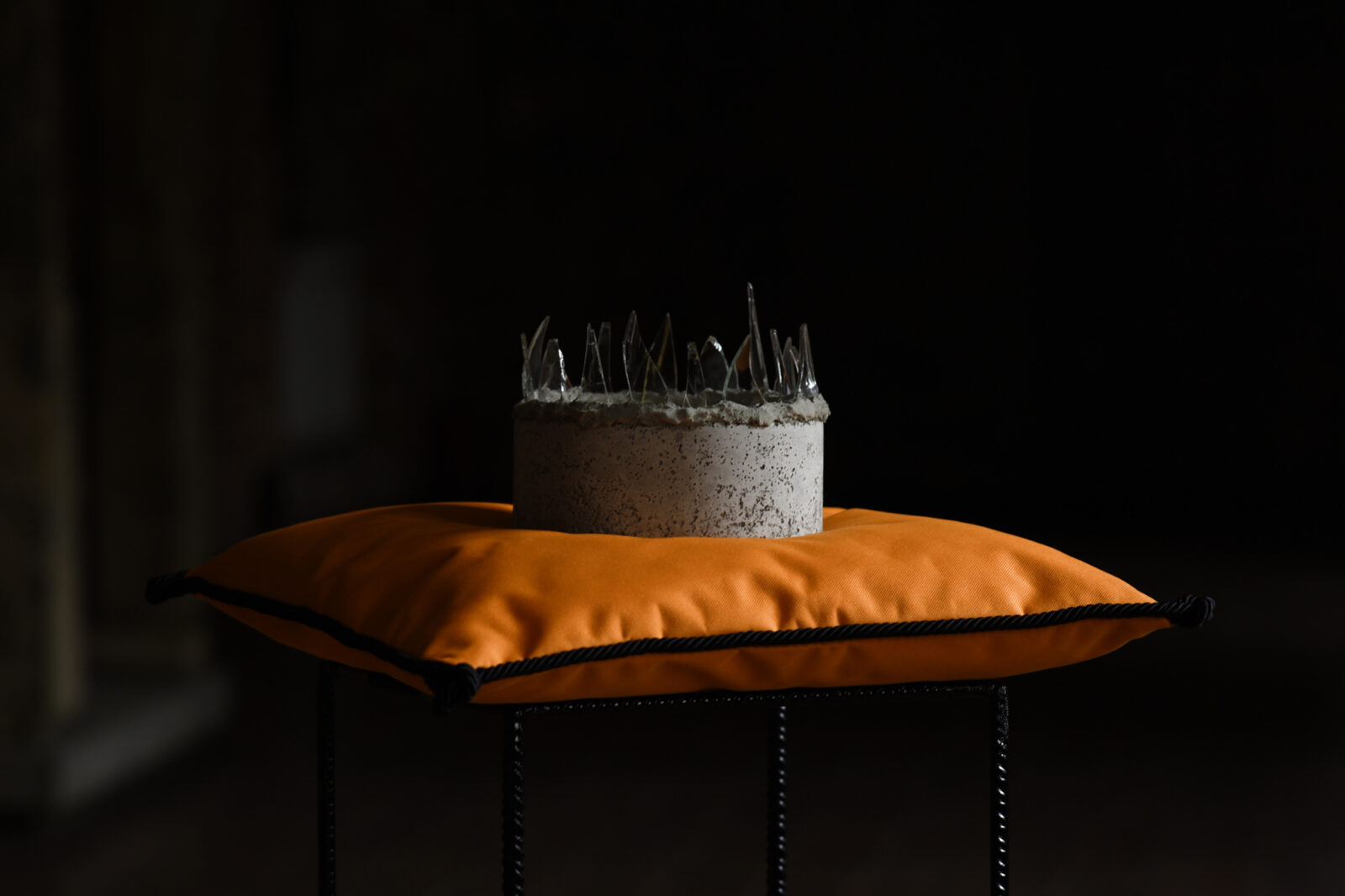
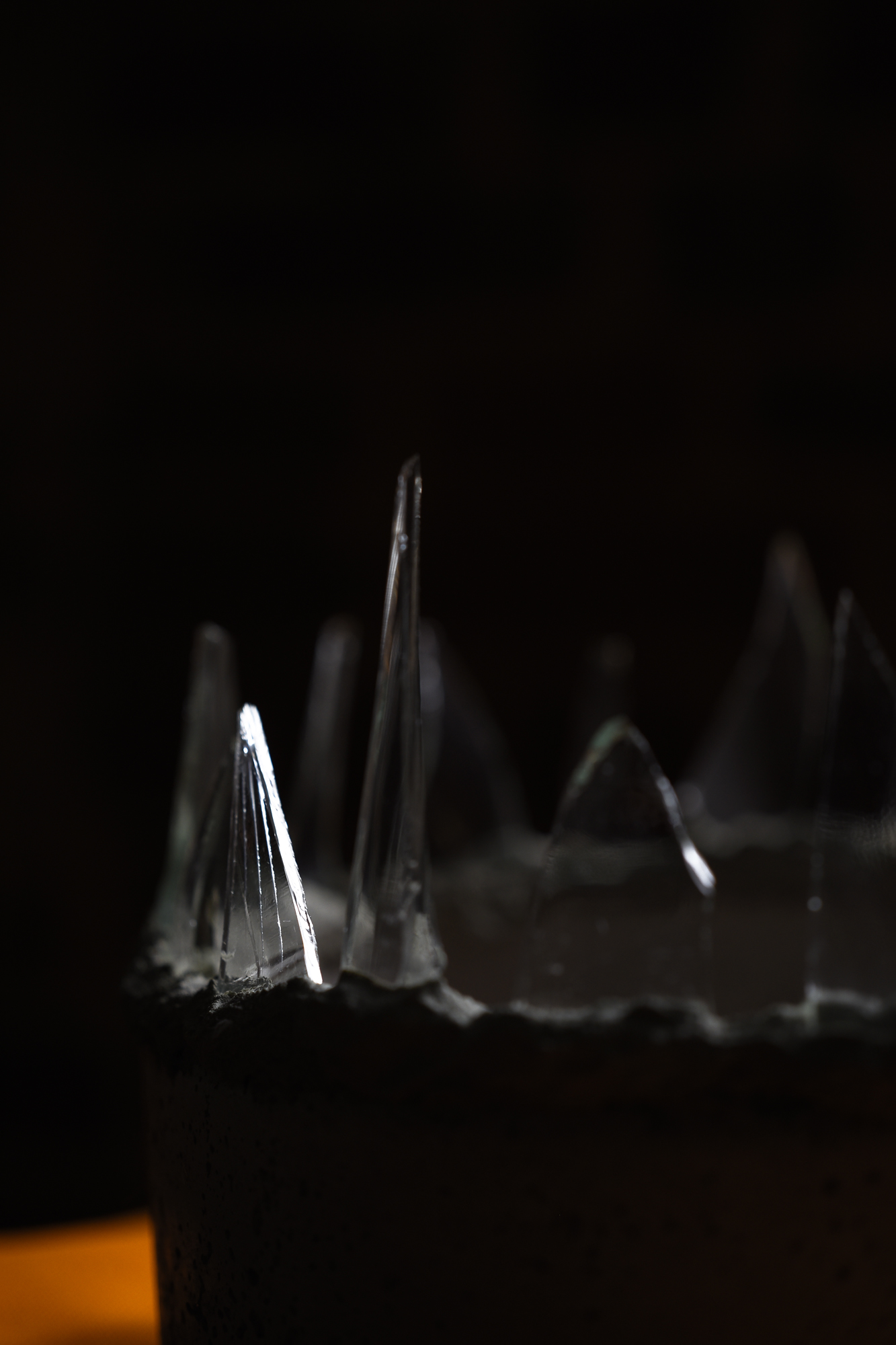
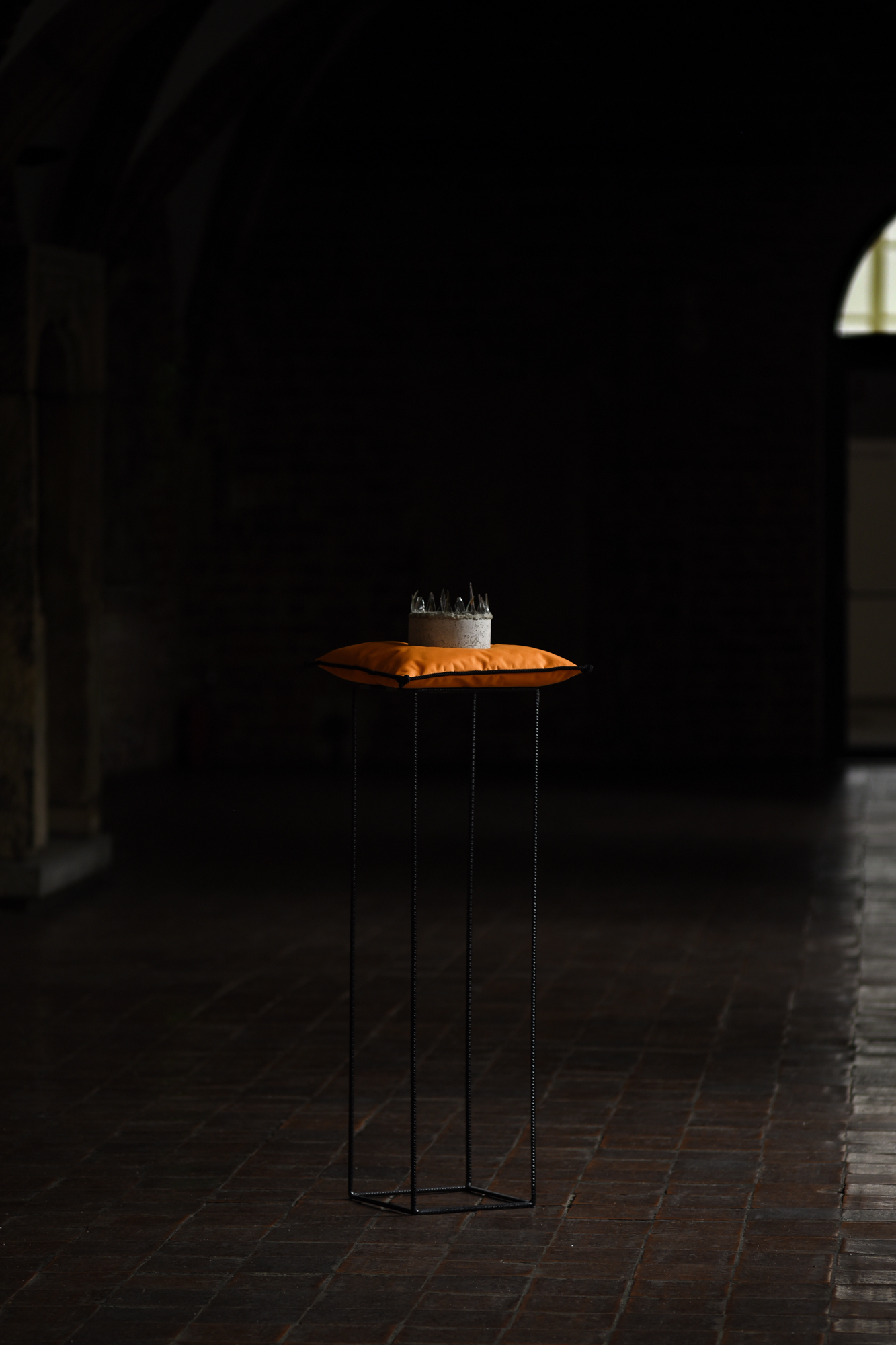
The work consists of a crown made of concrete and glass, resting on a cordura cushion. The colour scheme of the material is orange and black, associated with the flag symbolising people in the refugee crisis and solidarity with them. It symbolises a movement striving for the recognition of all refugees as representatives of a single nation. In this sense, national identity is based not on origin, but on the experience of having to leave one’s homeland and the attempt to find a new place to live.
At the corners of the cushion are knots signifying the memory of matters of great importance. The traditional symbolism of knots also represents the complexities of human fate. The word ‘crown’ (‘corona’ from latin) can refer both to an attribute of power placed upon the head and to the highest part of a wall (‘muralis’) from latin, its coping. The work refers to a method of providing additional security for fences. Pieces of broken glass are fixed with mortar to the top of the wall separating the property. This solution serves a similar function to that of barbed wire atop a metal mesh fence or the pointed tops of pickets in wrought-iron fences. This grassroots practice of ‘securing’ the private–public boundary, often illegal (under Polish law, if a wall is over 1.8 metres high, such fencing is permitted, provided it does not endanger the safety of people or animals), reveals human aspirations, fears and prejudices. Shattered sharp glass conveys a distrustful attitude towards the world and towards other people, whilst simultaneously affecting social relations. Borders divide the world into fragments, shredding it.
The work was created at a time when a wall was being built on the Polish-Belarusian border, intended to prevent its ‘illegal’ crossing. As Polish and international humanitarian organisations warn, human rights are being violated at the border; Polish guards frequently carry out so-called ‘pushbacks’, forcing people attempting to cross the frontier back into Belarus, thereby preventing them from applying for protection.